Science Knowledge Organisers
Science Knowledge Organisers
Clive Davies
Couldn't load pickup availability
This product is FREE when you subscribe to our Learning Challenge Curriculum Whole School Plan.
View the Learning Challenge Website here
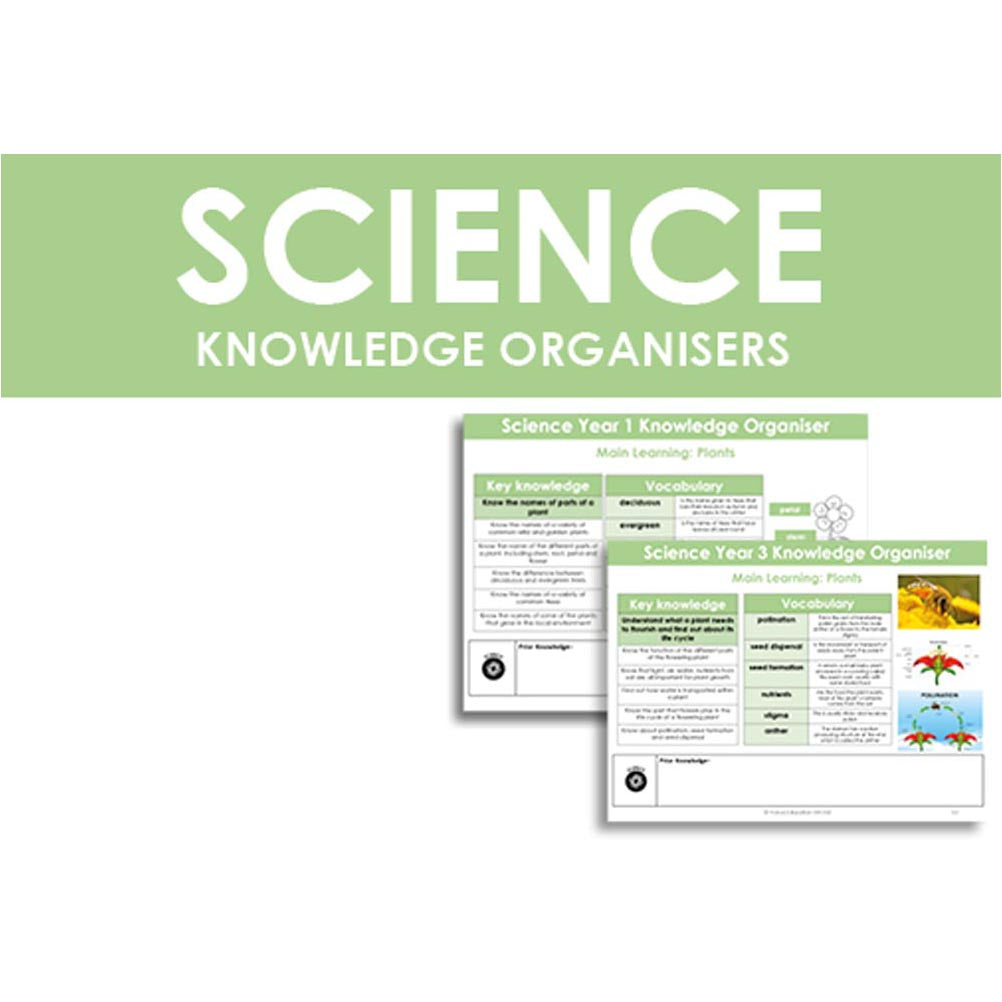
Our design ensures that each organiser contains no more than six vocabulary words and that the key knowledge pupils should acquire is clear.
The organisers are uncluttered, use the same font throughout and follow a similar outline for each subject to avoid extraneous cognitive load.
In addition, each organiser has a 'prior knowledge' section to be completed as a class at the beginning of any new unit of learning. This prior knowledge 'harvester' helps to ensure long-term retention.
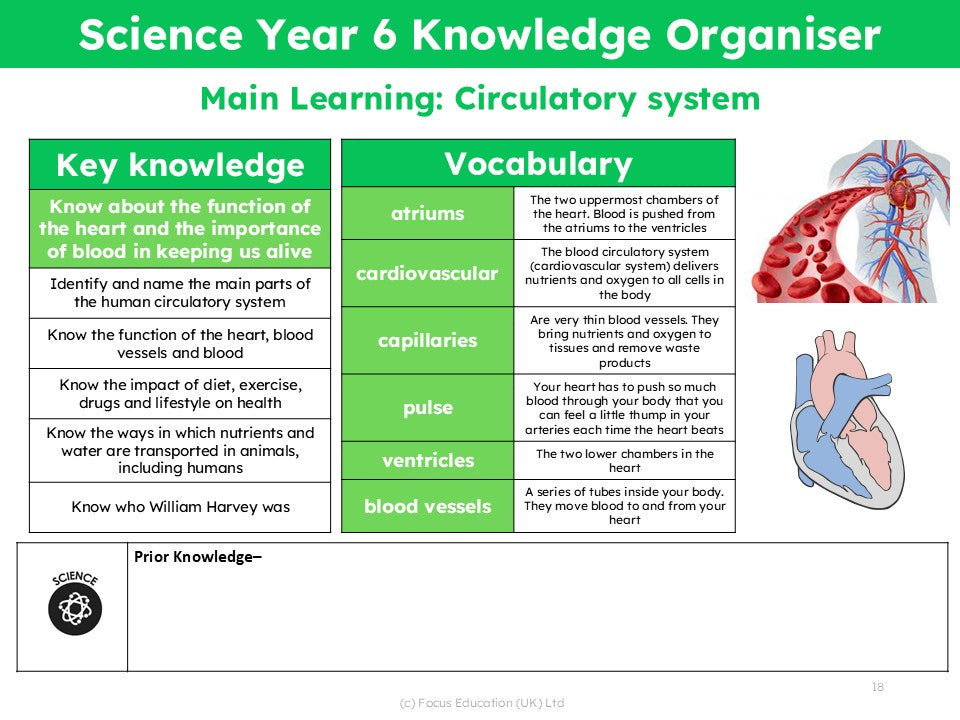
Download a free Science Knowledge Organiser on Heart and Circulatory System (Place the order by choosing the FREE knowledge organiser in the drop down list) This will download as a jpeg file just to give you an idea what they look like, but the actual product (if you buy it), is a powerpoint file.
Also see our brand new Science Trailers. These can be used as an alternative or addition to our knowledge organisers.
View our full range of knowledge organisers in History, Geography, Science, Art, DT and Maths
Useful Information
Product Reference: KMS-OPT
Pages: 27
Format: eBook
Publisher: Focus Education (UK) Ltd
Published Date: January 2022
What is included in each Year Group File?
Straight Year Groups
Year 1 - How are Animals Classified?
Year 1 - What are the materials that are around us called?
Year 1 - What are our seen body parts called and what do we mean by the five senses?
Year 1 - How do seasons change? (1)
Year 1 - How do seasons change? (2)
Year 1 - What are the names of the different parts of plants?
Year 2 - What are the properties of different materials?
Year 2 - What do plants and trees need to grow healthily?
Year 2 - Why do animals choose the habitat they have?
Year 2 - What are habitats and how do they work?
Year 2 - Why is it important to keep our bodies healthy?
Year 3: What are the main types of rock on our Earth?
Year 3: What do we mean by a 'force'?
Year 3: What is a magnetic force?
Year 3: What roles do different parts of plants play in helping them grow healthily?
Year 3: Why do humans have skeletons and muscles?
Year 3: Why do we have light and dark and what is its impact on our everyday Life?
Year 4: How are living things grouped?
Year 4: How do some solids, liquids and gases change state?
Year 4: How is sound created and how does it travel?
Year 4: What happens to the food we eat?
Year 4: What is electricity and why is it so important in our lives?
Year 5: What do we know about the life cycles of humans and various animals?
Year 5: What do we know about plant reproduction and how does this compare to animals?
Year 5 What do we know about the Sun, Earth, Moon and Planets?
Year 5: What is a force and how does it impact on the way things move?
Year 5: What materials can or cannot be changed back to their original form?
Year 6: How are living things grouped and classified?
Year 6: How do our eyes help us see?
Year 6: How does electricity work and how does its power vary?
Year 6: How does the heart work and why is it so important?
Year 6: How have living things on Earth changed over time?
Mixed-age Year Groups
Science Y1/2: How do Seasons Change? 1
Science Y1/2: How do Seasons Change? 2
Science Y1/2: What are our seen body parts called and what are the five senses?
Science Y1/2: Why do animals choose to live where they do? 1
Science Y1/2: Why do animals choose to live where they do? 2
Science Y1/2: What are the names of the different parts of plants?
Science Y1/2: How are animals classified?
Science Y1/2: Why is it important to keep our bodies healthy?
Science Y1/2: What are the properties of different materials? 1
Science Y1/2: What are the properties of different materials? 2
Science Y1/2: What do plants and trees need to grow healthily?
Science Y3/4: What is electricity and why it so important in our lives?
Science Y3/4: What are the main types of rocks on our Earth?
Science Y3/4: How do some solids, liquids and gases change state?
Science Y3/4: Why do humans have skeletons and muscles?
Science Y3/4: What do we mean by a ‘force’?
Science Y3/4: Why do we have light and dark and what is its impact on our everyday life?
Science Y3/4: How is sound created and how does it travel?
Science Y3/4: What happens to the food we eat?
Science Y3/4: What roles do different parts of plants play in helping them grow healthily?
Science Y3/4: How are living things grouped?
Science Y5/6: What do we know about the life cycles of humans and various animals?
Science Y5/6: Which materials can or cannot be changed back to their original form?
Science Y5/6: What is a force and how does it impact on the way things move?
Science Y5/6: How do our eyes help us see?
Science Y5/6: What do we know about the Sun, Earth, Moon and the Planets?
Science Y5/6: How have living things on Earth changed over time?
Science Y5/6: How does the heart work and why is it so important?
Science Y5/6: How does electricity work and how does its power vary?
Science Y5/6: How are living things grouped and classified?
eBooks are sent via email link. If you choose to pay by card or PayPal, the link will be sent at once, automatically.
FREE UPDATES INCLUDED
If you purchase the eBook version, you will receive free updates to this publication where the existing content is amended or updated.
This does not include any new or substantially revised publications, which may be published separately in the future.
Simply log in to your account and visit 'MY LIBRARY' to access the latest version. If you have any difficulty, please email customerservice@focus-education.co.uk
If you choose to pay against invoice, your order will be processed manually, and the link will be sent the same day or the next working day. If our email does not arrive, please contact our customer services team. Please check your email junk/trash/bulk folders first.
This product cannot be returned or refunded.
Focus Education resources must be used by the purchasing school, organisation or individual only. They are for use within one school or organisation and must not be used across a federation, academy trust, chain or any other collection of schools or organisations. Focus Education prohibits the distribution of the content of its resources either physically or electronically outside the purchasing school or organisation, including placing the whole or parts of a resource on social media or websites.
See Terms & Conditions.
Share